The 5 Warning Signs
Your Furnace Is 15 Years Old or Older
The average gas furnace lasts 15–20 years with regular maintenance. In Fresno, where furnaces run fewer hours per year than in colder climates, you may get closer to the high end. But once you cross 15 years, you're in the zone where significant failures become likely. A furnace that old is also much less efficient than modern 95–96% AFUE models — you may be burning 20–30% more gas than necessary just because of your equipment's age.
Your Heating Bills Keep Climbing
If your gas bill has increased year over year without a corresponding change in usage patterns or gas prices, your furnace is losing efficiency. Heat exchangers crack, burners get dirty, and internal components wear — all of which make the furnace work harder to produce the same amount of heat. A 15-year-old furnace running at 70% efficiency costs significantly more to operate than a new 96% AFUE unit. Run the math: the efficiency savings on a new furnace often pays for a substantial portion of the replacement cost within 5–8 years.
You've Had Two or More Major Repairs in the Last Three Years
One repair is normal. Two major repairs within three years is a pattern. Older furnaces tend to fail in clusters — once one component goes, others follow. If you've already replaced a heat exchanger, inducer motor, or control board, the next expensive part is likely not far behind. Compare the cumulative repair cost against the cost of a new system. Most homeowners find that a new furnace — especially with a 10-year warranty on parts and labor — makes more financial sense than continuing to prop up aging equipment.
Your Burner Flame Is Yellow or Orange Instead of Blue
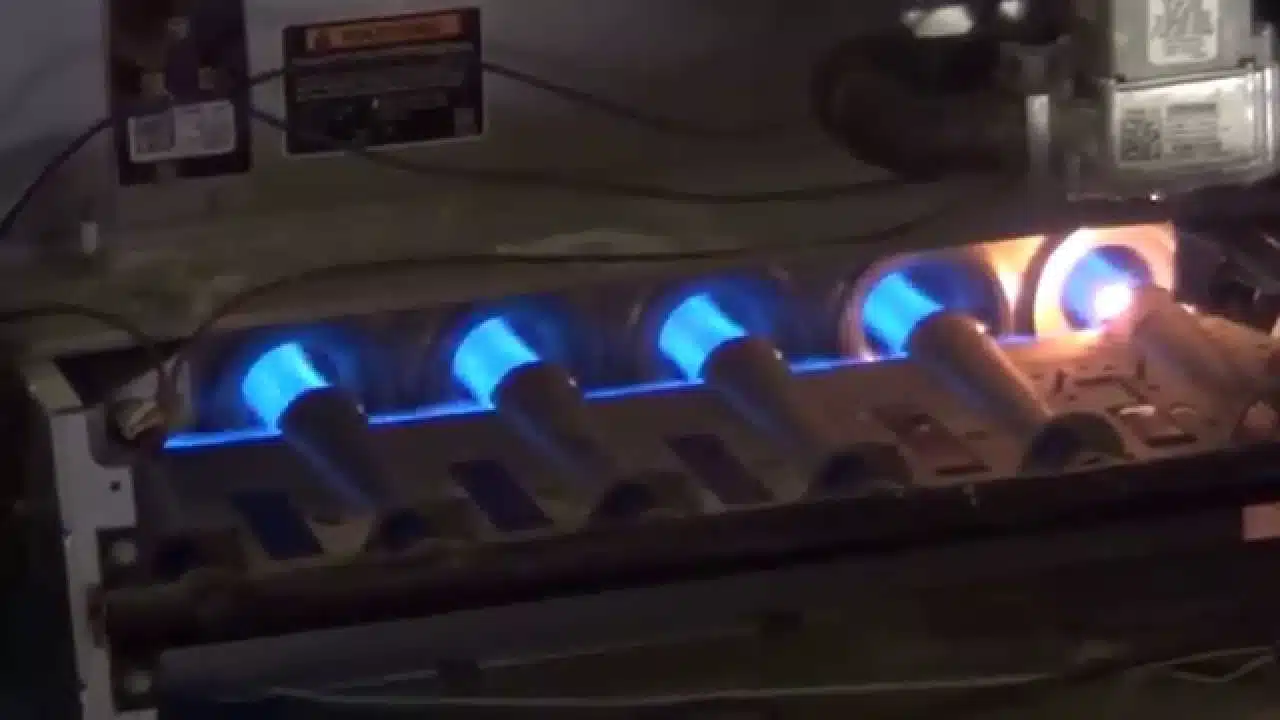
A healthy gas furnace burns with a steady blue flame. A yellow or orange flame means incomplete combustion — and that is a carbon monoxide warning sign. Other indicators of a combustion problem include: soot around the furnace, excess moisture on windows near the furnace, and a pilot light that frequently goes out. If you see a yellow flame, turn off the furnace and call a technician immediately. Do not ignore this sign.
Uneven Heating, Strange Noises, or Frequent Short-Cycling
Rooms that won't warm up, banging or rattling sounds during operation, and a furnace that turns on and off repeatedly (short-cycling) all indicate a system that can no longer reliably heat your home. These symptoms can sometimes be repaired, but in an older system they often signal that the furnace has reached the end of its useful life. A technician can assess whether the underlying issue is repairable or whether you're looking at the beginning of a cascade of failures.
Safety priority: A cracked heat exchanger is the most serious furnace problem — it can allow carbon monoxide into your living space. CO is colorless, odorless, and potentially fatal. If your CO detector goes off or you experience symptoms like headaches, dizziness, or nausea while the furnace is running, leave the house and call 911. Install CO detectors on every level of your home.
The 50% Rule: Repair or Replace?
A simple guideline: if the cost of a repair exceeds 50% of the cost of a new furnace, and the system is more than 10 years old, replacement makes more financial sense. A new furnace in the Fresno area typically runs $3,000–$6,500 installed, depending on the efficiency tier and any modifications needed. A $1,500 repair on a 16-year-old furnace is likely money poorly spent.
Fresno-specific note: Because our winters are relatively mild, the payback period on a high-efficiency furnace is longer than in colder climates. A 96% AFUE unit vs. an 80% AFUE unit saves less money annually in Fresno than it would in Minnesota. We'll run the numbers for your specific home and help you decide which efficiency tier actually makes financial sense.
What to Do Next
If your furnace is showing one or more of these signs, the right first step is a thorough diagnostic inspection. Our technicians will assess the heat exchanger, burner condition, combustion efficiency, and overall system condition — and give you an honest recommendation on whether repair or replacement makes sense for your situation. We don't push replacement if repair is the right call, and we don't recommend expensive repairs on a system that's on borrowed time.
Schedule a furnace diagnostic or call (559) 254-4680. If you're already leaning toward replacement, request a free in-home furnace replacement estimate.